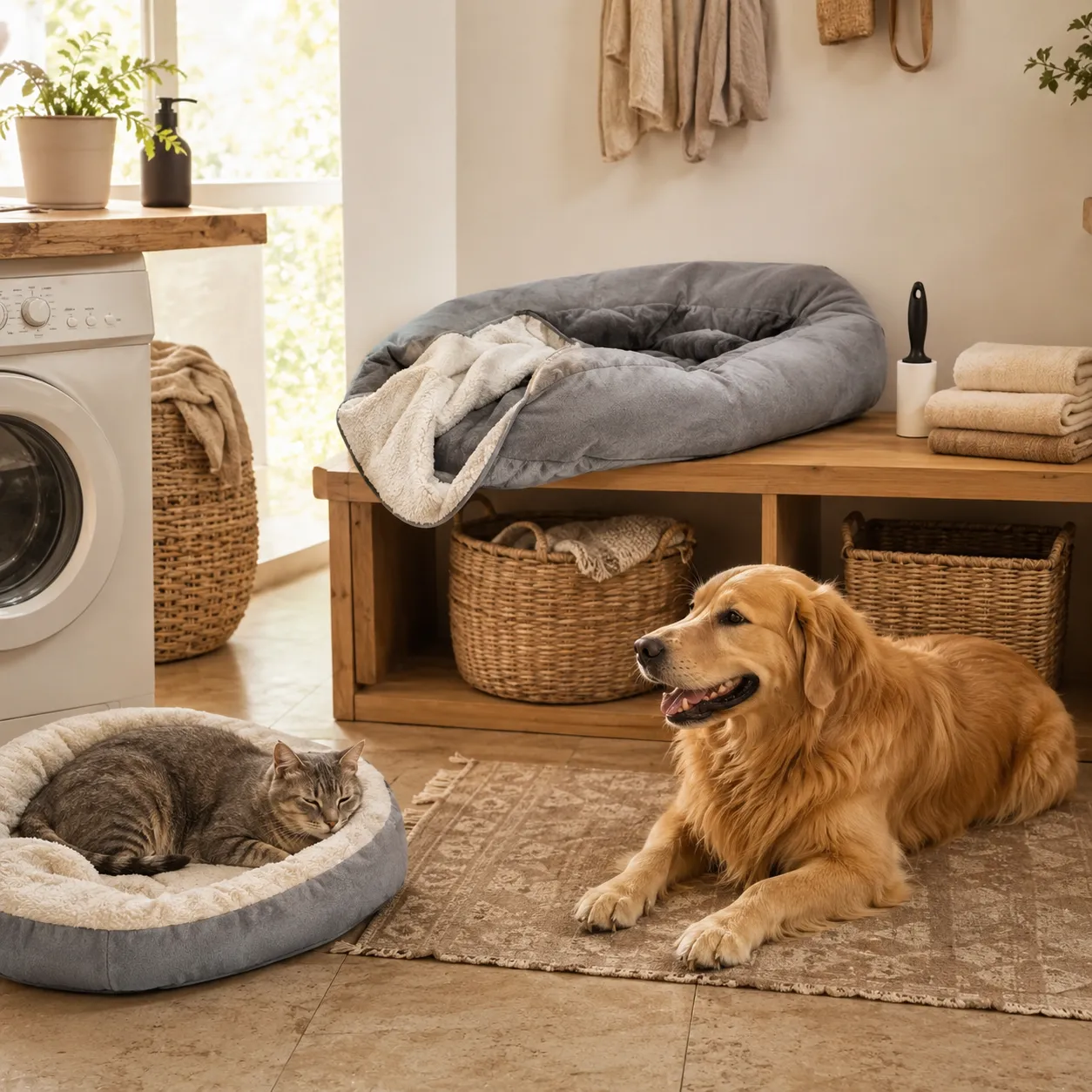
As an Amazon Associate I earn from qualifying purchases.
Buying a dog bed online sounds simple until the size choices start looking strangely close to each other. Small, medium, large, extra large. Then you look at your dog on the floor and realize they do not sleep like a neat rectangle.
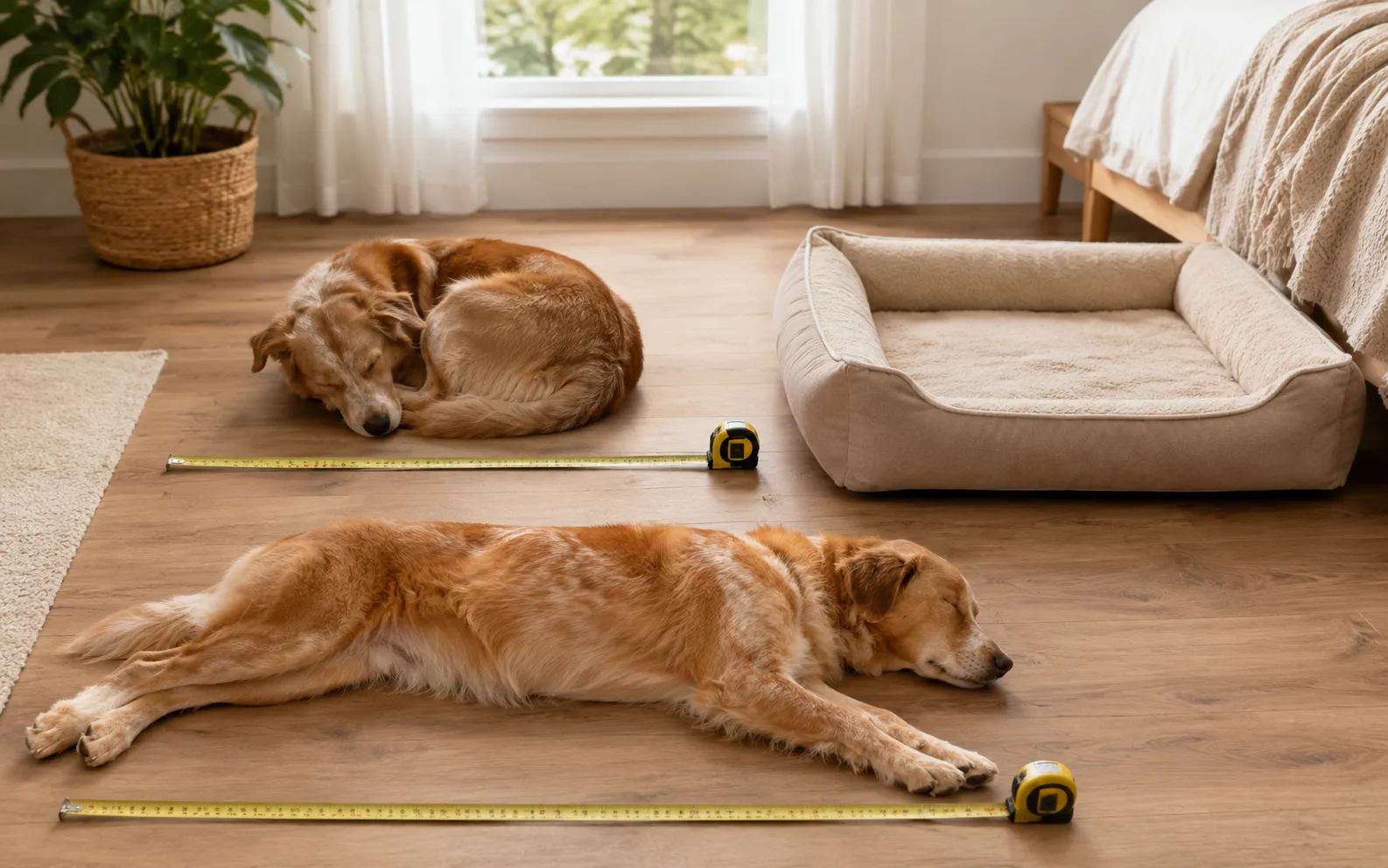
Some dogs curl into a tight donut. Some sprawl out like they pay rent. Some hang their head off the edge, even when there is plenty of room. That is why the better question is not just “What size dog bed do I need?” It is “How much usable space does my dog actually need to sleep the way they already sleep?”
A size name alone is not enough. A large dog bed from one listing may not feel the same as a large dog bed from another. Bolsters, raised edges, thick seams, and the shape of the bed all change how much space your dog can actually use.
Start with how your dog actually sleeps
Before measuring anything, watch your dog for a day or two.
Not the cute photo version. The real version.
Do they curl up with their nose tucked near their tail? Do they stretch their legs straight out? Do they flop sideways? Do they lean against a wall, couch, pillow, or the side of a crate? Do they start on the bed and slowly slide halfway off it?
Those habits tell you more than a breed chart.
A dog that curls up may be comfortable on a smaller sleeping surface, especially if they like edges. A dog that stretches needs more flat length. A dog that leans may like a bolster, but the bolster will take up some of the bed’s usable middle space.
Also think about where the bed will go. A bedroom bed can be a little roomier. A crate bed has to be much more exact. A living room dog bed may need to fit beside a sofa, under a window, or in a corner without turning into a tripping hazard.
Measure the dog, not just the breed
Breed size can be a rough starting point, but it is not enough for buying a dog bed.
Two dogs from the same breed can sleep differently and carry their body weight differently. One may be long and lean. Another may be compact and stocky. Puppies change fast. Senior dogs may want more room to reposition.
For a practical measurement, wait until your dog is lying down in their normal sleeping position. Measure from nose to tail area, then side to side at the widest point. If your dog stretches out, measure them stretched. If they curl, measure the curled shape but give extra room so they are not squeezed into the bed.
Then add some space.
Not a fake formula. Just common sense. Your dog should be able to shift, turn, and settle without constantly falling off the edge. If the bed has raised sides, check the inner sleeping area, not only the full outside dimensions.
That last part matters a lot.
A dog bed may look large on the outside but feel smaller once bolsters, seams, or padded edges take up space.
Curlers vs stretchers
Curlers and stretchers usually need different beds.
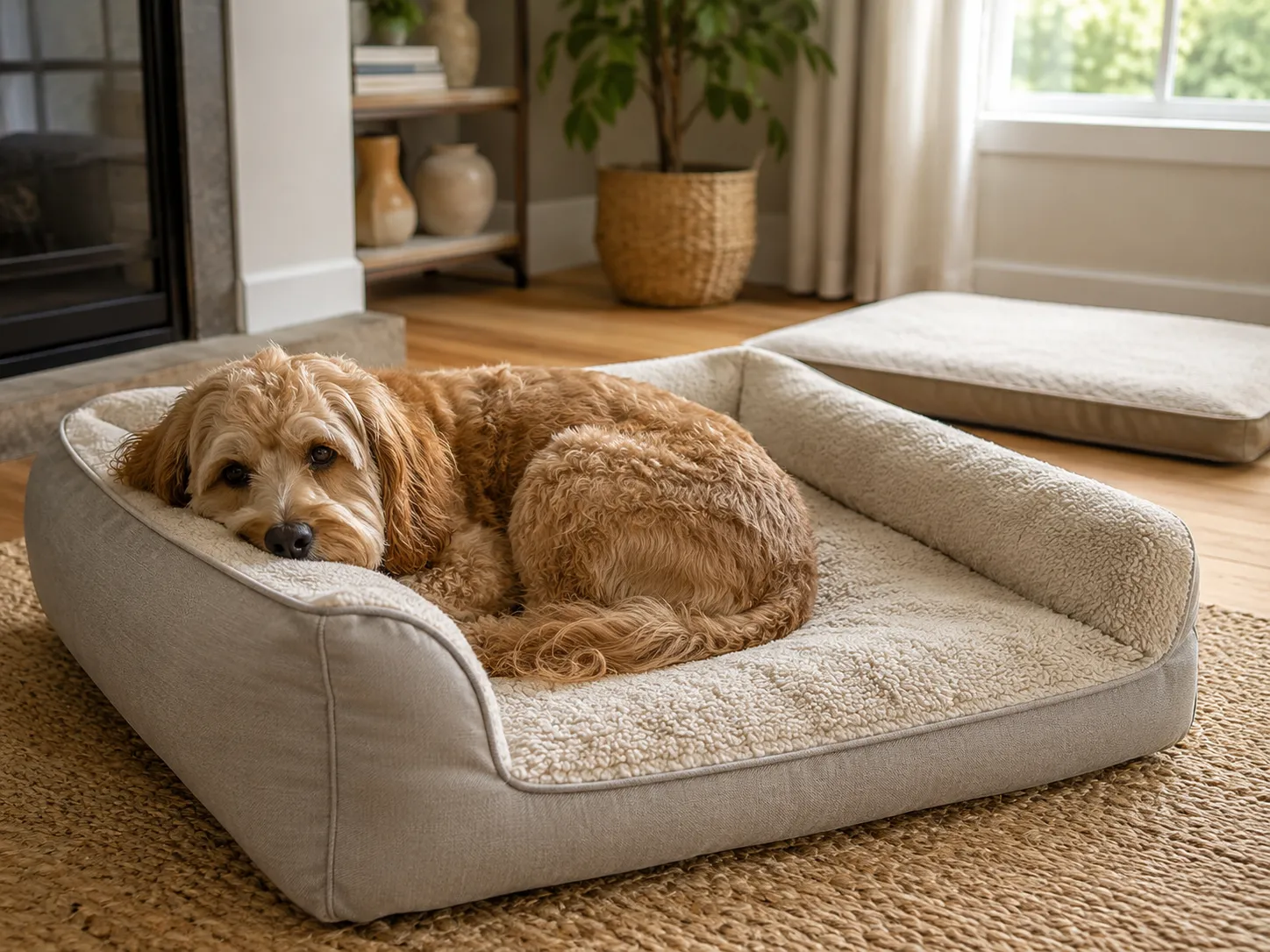
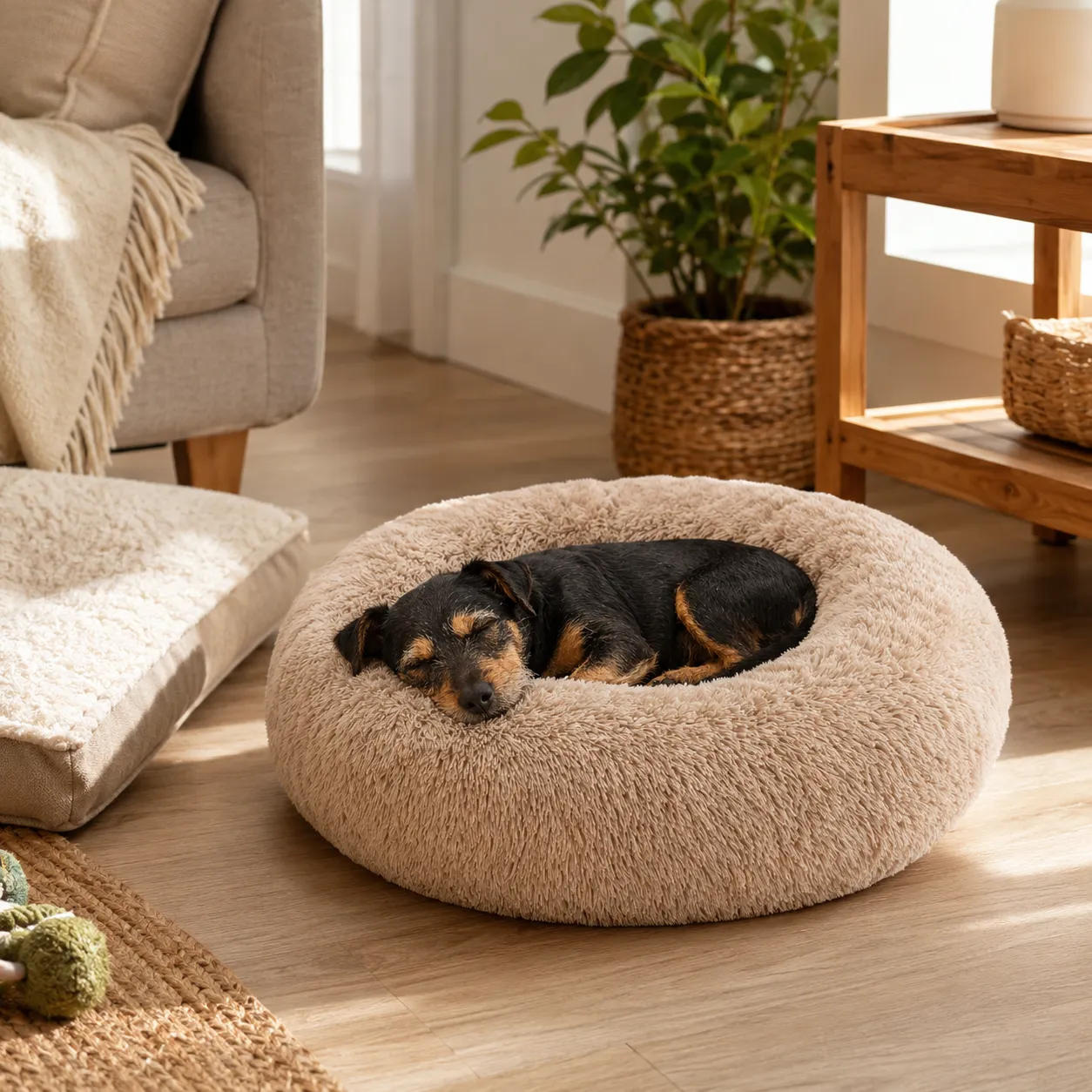
A curler likes to tuck in. These dogs often enjoy round beds, donut-style beds, bolster beds, or sofa-style beds where the edges give them something to lean into. The bed still needs enough interior room, but it does not always need to be huge.
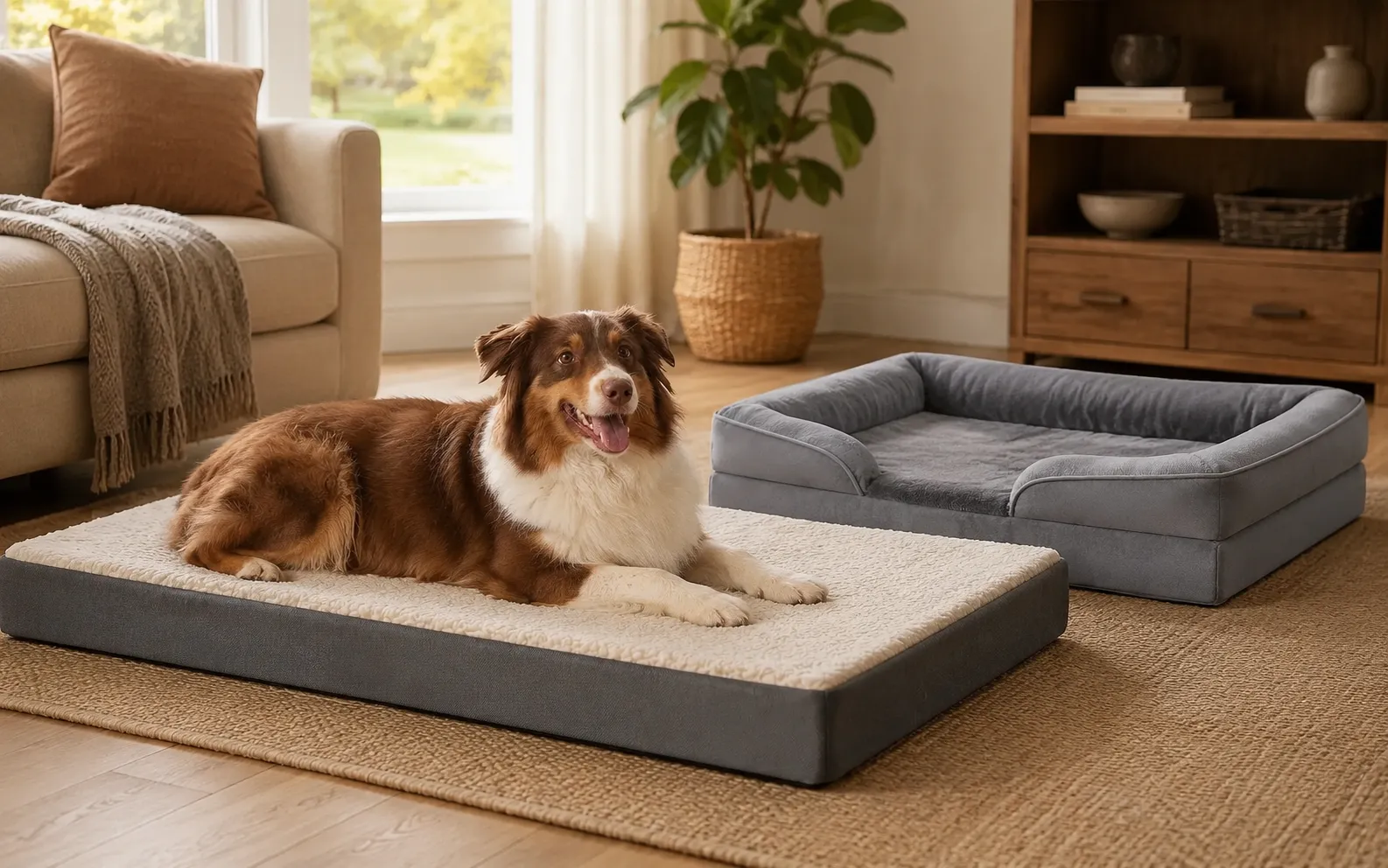
A stretcher needs length. These are the dogs that lie on their side with legs out, or sleep belly-down with paws forward. For them, a flat mattress-style bed or a larger sofa-style bed may make more sense. If the bed has bolsters on every side, make sure the open sleeping area is long enough.
Some dogs do both. They curl at night, stretch during the day, and choose the weirdest possible angle just to make sizing harder.
For those dogs, size up when the room allows it. A little extra space is usually easier to live with than a bed that only works in one sleeping position.
Why bolsters change the usable space
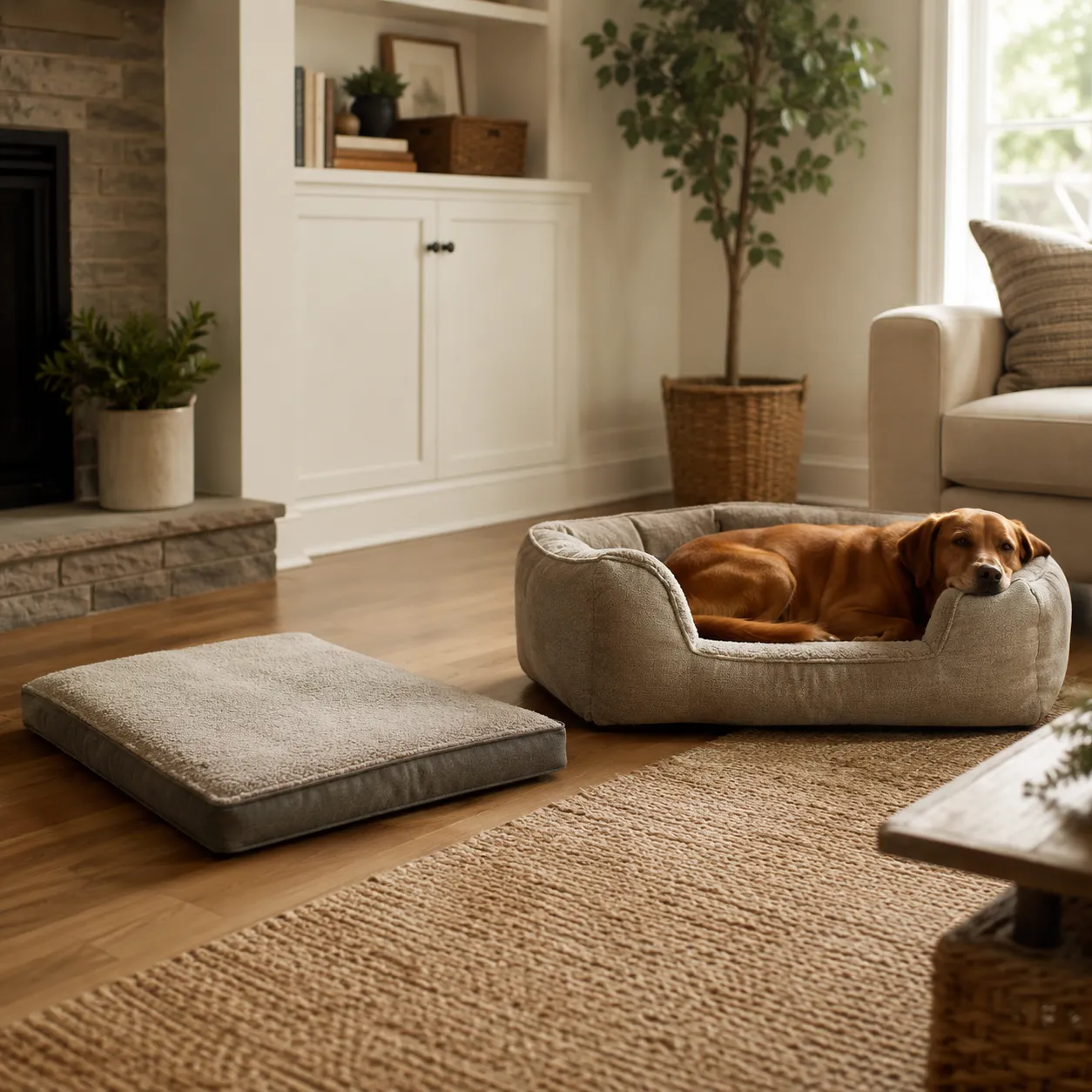
Bolsters are those raised edges around part or all of a dog bed. Many dogs like them because they can rest their head, press their back against the side, or feel more tucked in.
But bolsters also reduce the flat middle area.
That means a large bolster dog bed may not feel as roomy as a large flat dog bed. The outside dimensions include the raised sides, but your dog sleeps inside them. If your dog is broad, long, or likes to stretch, look for the interior sleeping space when the product listing gives it. If the listing only shows outside dimensions, use the product photos carefully and assume some space is lost to the edges.
Entry height matters too. Some sofa-style beds and bolster beds have a lowered front opening, while others have raised sides all around. For puppies, small dogs, or older dogs, a lower entrance may be easier to step into. Do not assume every bolster bed has the same entry shape.
Bolsters are useful. Just do not size a bolstered bed the same way you would size a flat mat.
Crate beds need tighter size checks
A dog crate bed has less room for guessing.
If the bed is too large, it may bunch up, curl at the edges, or block the crate door. If it is too small, your dog may end up lying partly on the crate floor. Neither is great.
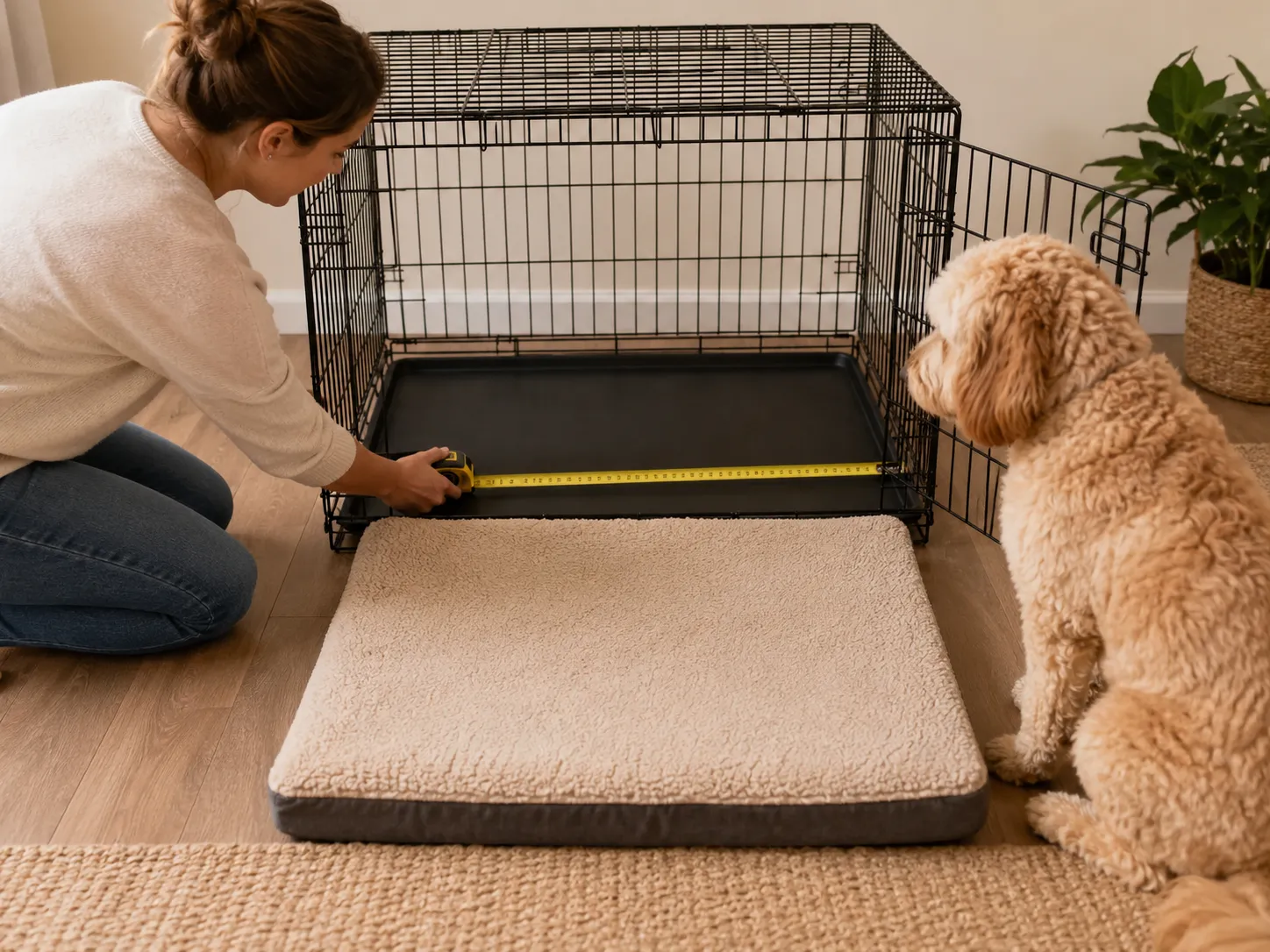
For crate beds, measure the inside of the crate, not the outside. Check length and width at the floor level. Then compare that to the bed dimensions on the listing. A crate mat or crate bed should sit flat without forcing the sides upward.
Also think about thickness. A thick bed may be comfortable for some dogs, but it can reduce headroom inside a crate. That may matter for taller dogs or crates with limited clearance.
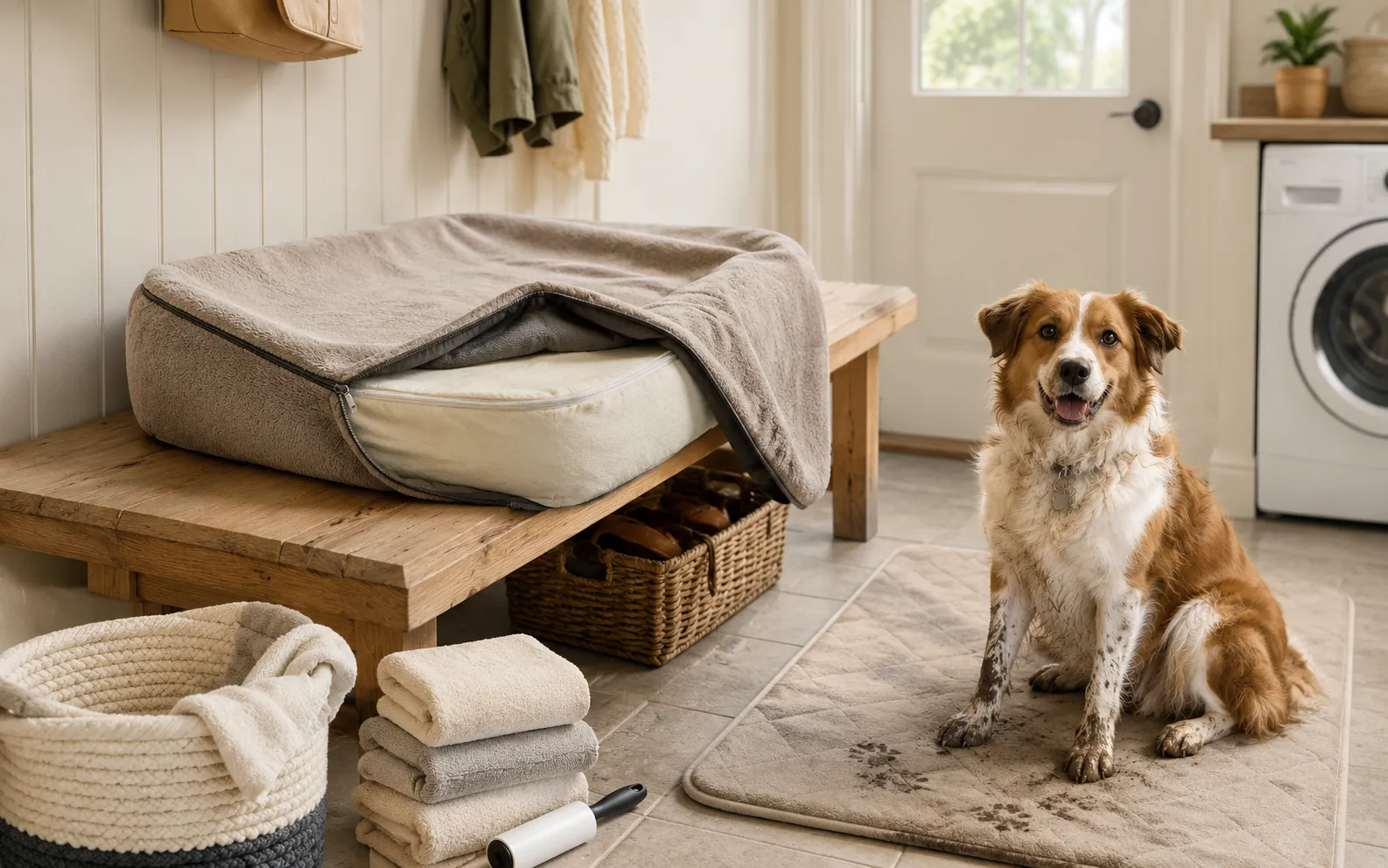
If your dog still chews, digs heavily, or has accidents in the crate, cleaning details matter as much as size. Check whether the cover is removable, whether the cover is machine washable, and what the care instructions say before buying.
Large dog beds: what matters
A large dog bed needs more than a big label.
For bigger dogs, usable sleeping area matters first. A large or extra large dog bed should give your dog room to lie in their normal position without hanging off every side. If your dog stretches, look closely at length. If your dog curls but is heavy or broad, check width and middle space.
Thickness can matter too, but do not assume thicker always means better. Look at what the listing actually says about materials, foam, fill, and support. If a product claims orthopedic foam or a specific support type, that should be clearly stated on the product page. Do not fill in missing details yourself.
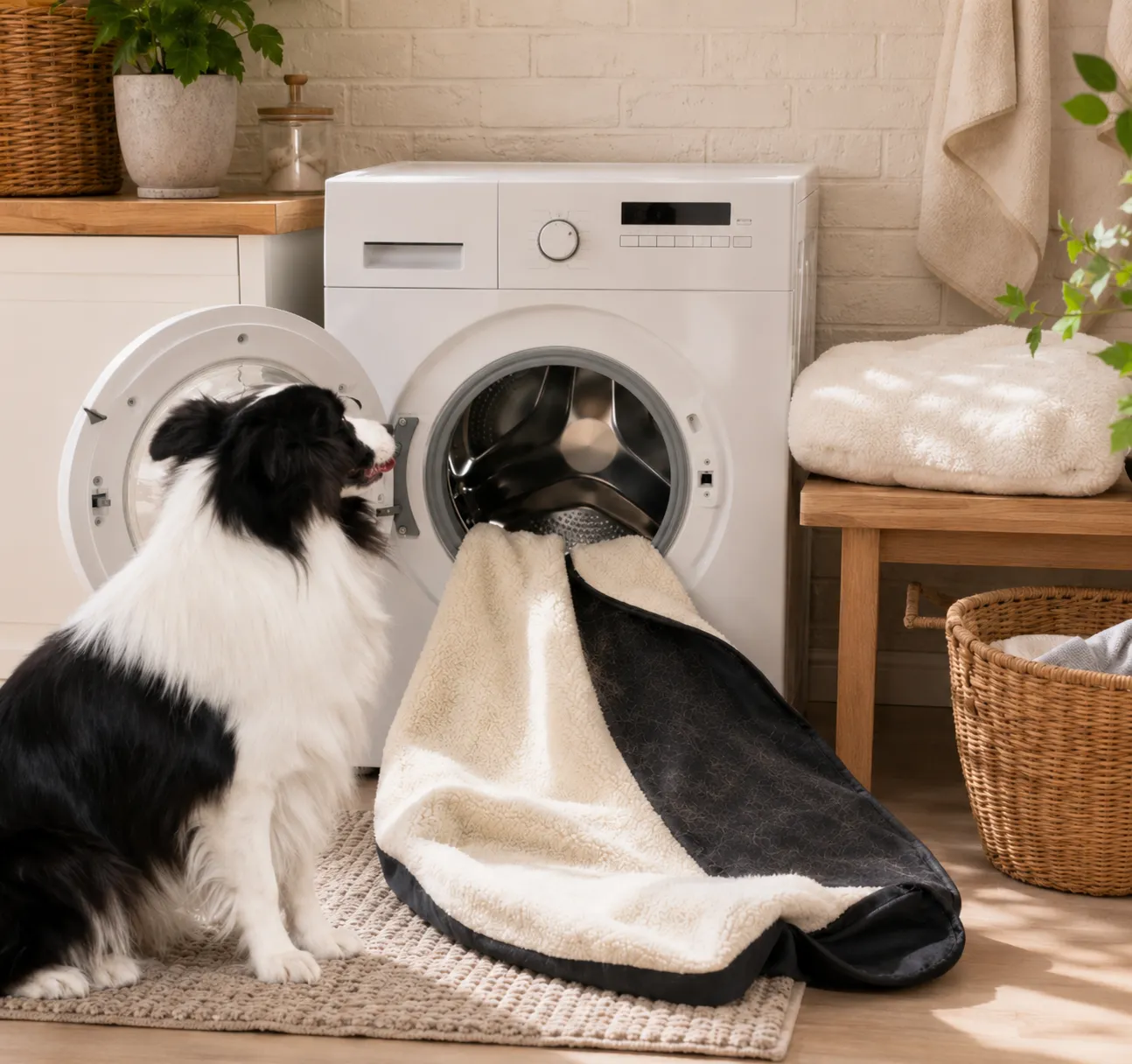
Large beds are also harder to clean. A removable cover can be more practical than trying to wash an entire oversized bed. But again, check the care instructions. “Washable” may refer to the cover, not the full inner cushion.
Placement is another real issue. A large dog bed in a small room can become the thing everyone steps over. Before ordering, measure the floor space where you want the bed to sit. Leave room for the dog to get on and off without being squeezed between furniture.
Small dog beds and puppy beds: what matters
Small dog beds are not automatically easier to choose.
Small dogs may like curled, cozy spaces, but some still stretch out. A tiny bed that looks cute in a product photo may not give enough room for the dog to turn around. For toy breeds and small dogs, check both the outer size and the actual sleeping area.
Puppy beds are trickier because puppies grow. A bed that fits now may feel too small soon. If you are buying for a young puppy, think about whether you want a starter bed for the current stage or a slightly roomier bed they can use longer. Just make sure the bed is not so oversized that the puppy avoids it or uses one corner only.
Cleaning also matters with puppies. Accidents happen. Mud happens. Chewing may happen too. Before choosing a puppy bed, check whether the cover comes off and how the bed should be cleaned. Do not assume waterproof protection unless the listing clearly confirms it.
For small dogs that like to burrow or lean, raised edges or soft bolsters may feel inviting. For small dogs that overheat easily or prefer the floor, a flatter bed may get more use. Your dog’s habits should lead the choice.
What to check before buying a Bedsure dog bed
Bedsure has a range of dog beds on Amazon, and sizing should be checked product by product. Do not rely only on the size name.
Before buying a Bedsure dog bed, look at:
- The listed dimensions for the exact size you are considering
- Whether those dimensions appear to be outside dimensions or sleeping-area dimensions
- Product photos showing a dog on the bed
- Whether the bed is flat, bolstered, sofa-style, crate-style, or another shape
- Entry height if the bed has raised sides
- Cover and care details
- Whether the bed will fit your room, crate, or usual sleeping spot
If you are comparing several Bedsure dog beds, it may help to open the listings side by side. A large sofa-style bed and a large flat bed may not give your dog the same usable room. The right choice depends on sleep style, shape, and where the bed will live.
For broader browsing, start with the main dog bed category, then narrow down by size and style.
Should I size up when buying a dog bed online?
Often, yes, especially if your dog stretches out or you are between two sizes. Just make sure the larger bed still fits your room or crate. For bolstered beds, sizing up may also make sense because the raised edges reduce the flat sleeping area.
Can I choose a dog bed size by breed?
Breed can give you a rough clue, but it should not be the only thing you use. Dogs of the same breed can have different body shapes and sleeping habits. Measuring your own dog is safer than trusting a general breed-size idea.
What size dog bed is best for a dog that curls up?
A dog that curls up may not need the longest bed, but they still need enough room to turn around and settle naturally. Round beds, bolster beds, or sofa-style beds may suit curlers, depending on the dog. Check the inner sleeping area, not just the outside size.
What size dog bed is best for a dog that stretches out?
Stretchers usually need more length and flat space. A mattress-style bed or a larger bed with fewer raised edges may work better than a tight bolstered shape. Measure your dog while they are stretched out, then compare that to the bed dimensions.
Is an extra large dog bed always better for a large dog?
Not always. Extra space is useful, but the bed still has to fit your home and your dog’s habits. Some large dogs curl tightly. Others need a long, flat surface. Shape and usable space matter as much as the size label.
How do I know if a dog bed will fit in a crate?
Measure the inside floor of the crate. Then compare that to the bed dimensions on the listing. The bed should sit flat without bunching up or blocking the door. Also check thickness so your dog still has comfortable headroom.
Do bolsters make a dog bed smaller?
They can. Bolsters take up part of the bed’s total footprint, which means the sleeping area inside may be smaller than the outside measurements suggest. For dogs that stretch or sprawl, this is worth checking carefully.
Bottom line
The right dog bed size is not about picking small, large, or extra large and hoping for the best. It is about matching the bed to your dog’s real sleeping habits.
Measure your dog. Notice whether they curl, stretch, lean, or sprawl. Check the bed shape. Look at the usable sleeping area, especially with bolsters. For crates, measure the crate floor before anything else.
When comparing Bedsure dog beds, read the exact Amazon listing for the size, shape, cover details, and care instructions. A bed that fits your dog on paper still needs to fit the way your dog actually sleeps.
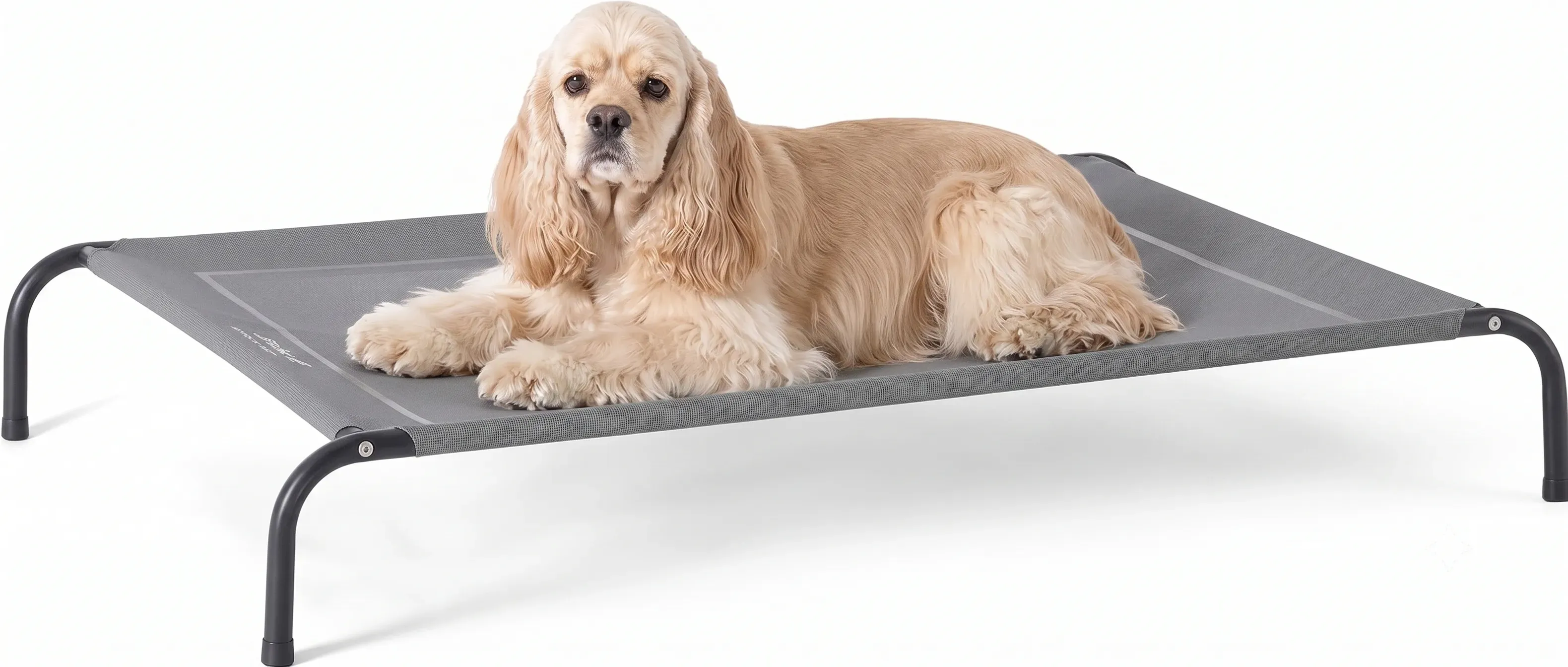 Bedsure Elevated Outdoor Dog Bed
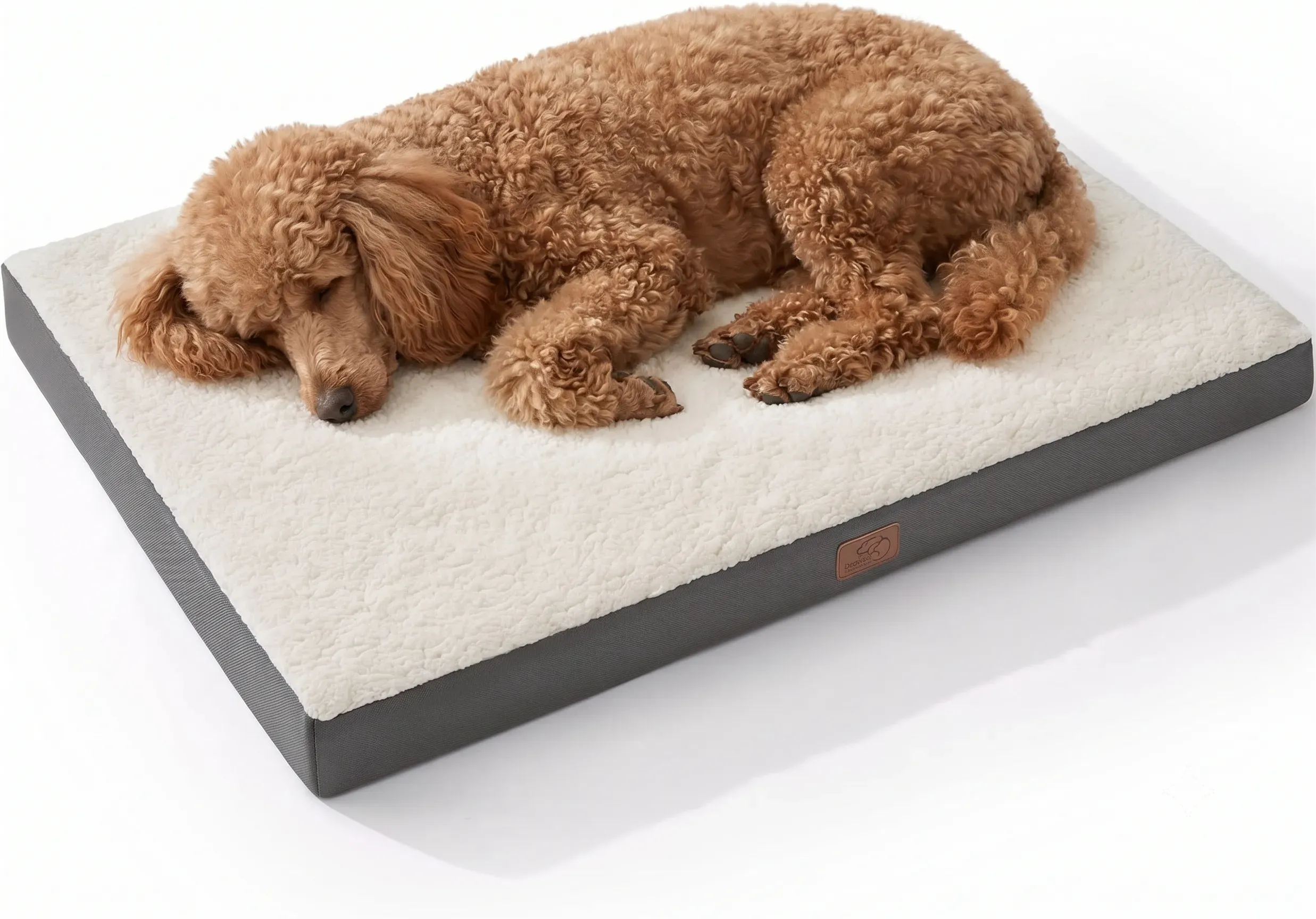 Bedsure Orthopedic Egg-Crate Dog Bed
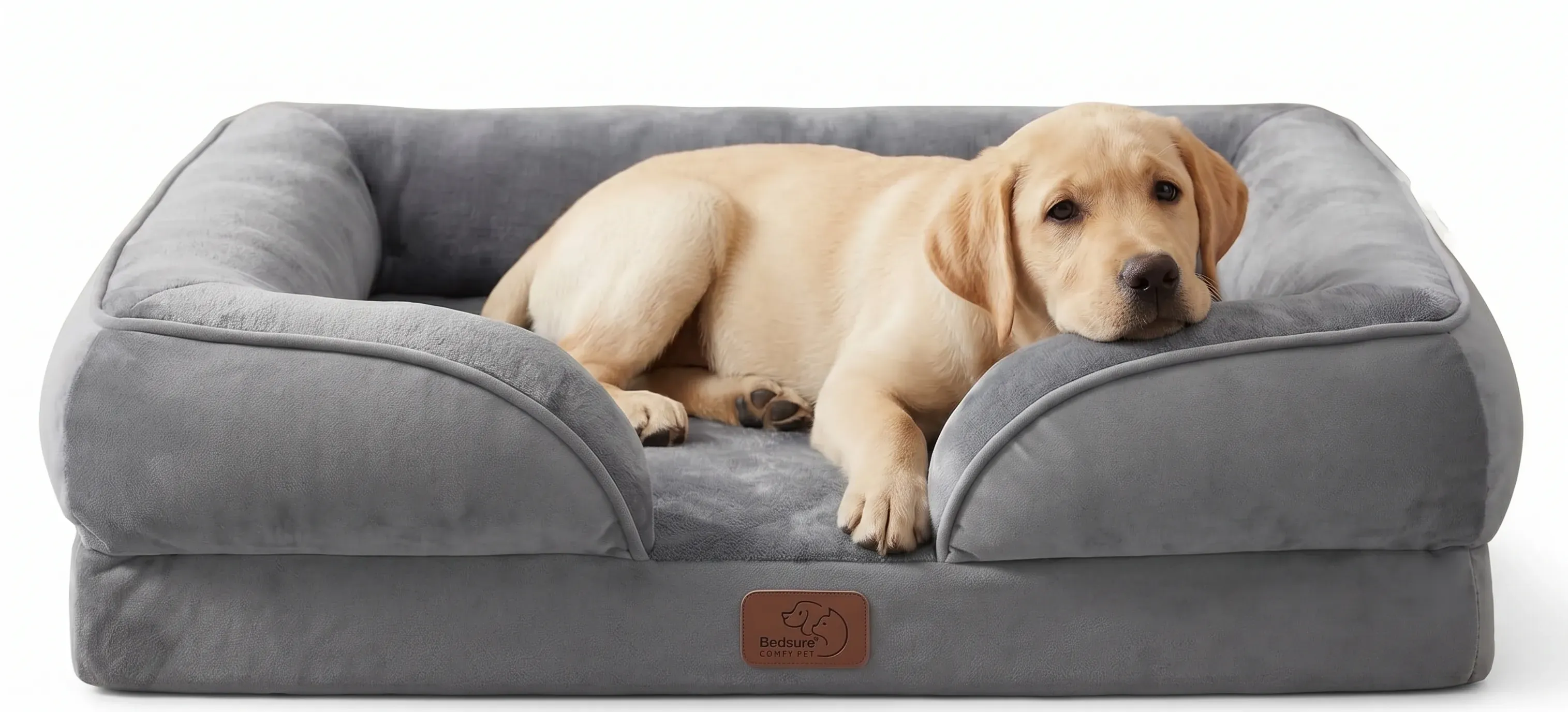 Bedsure Orthopedic Medium Dog Sofa Bed
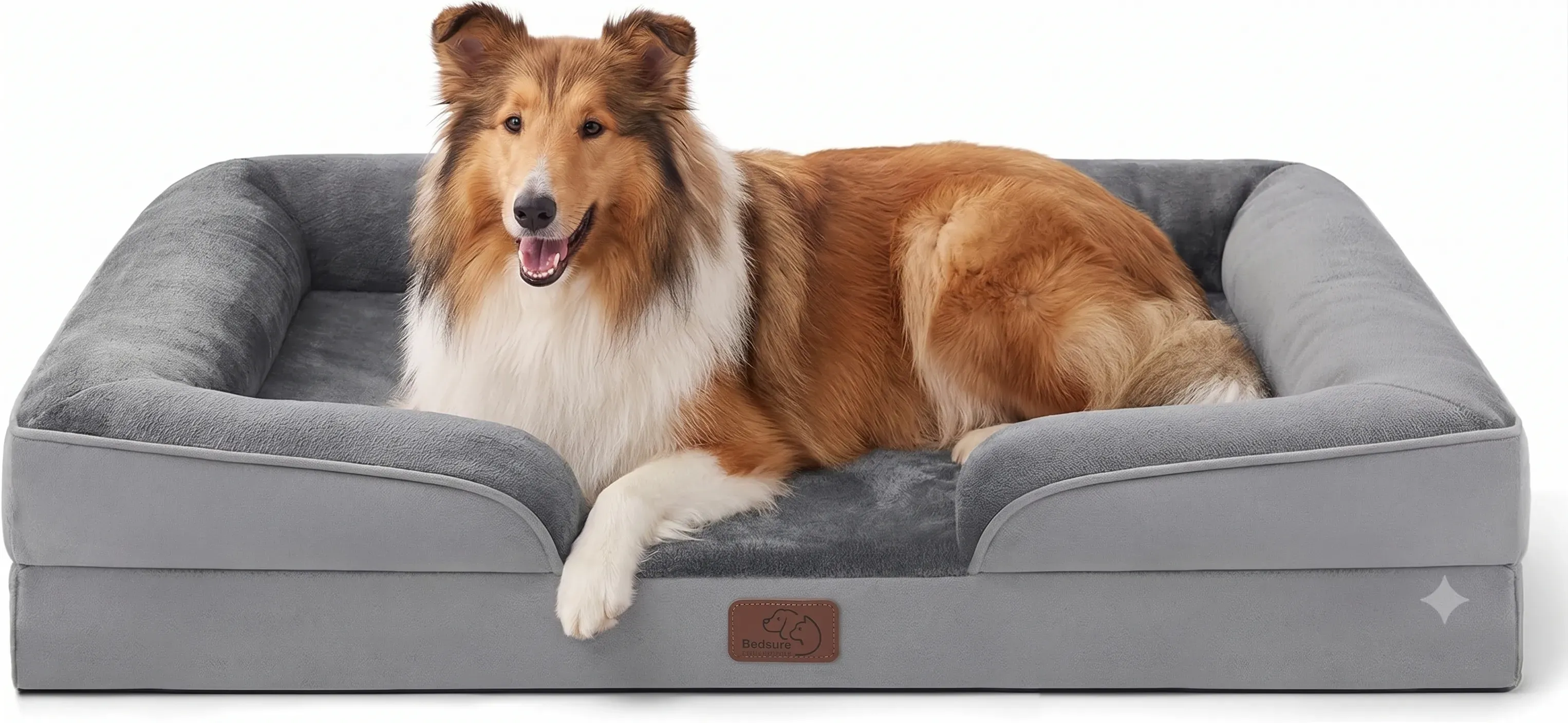 Bedsure Orthopedic Large Dog Sofa Bed
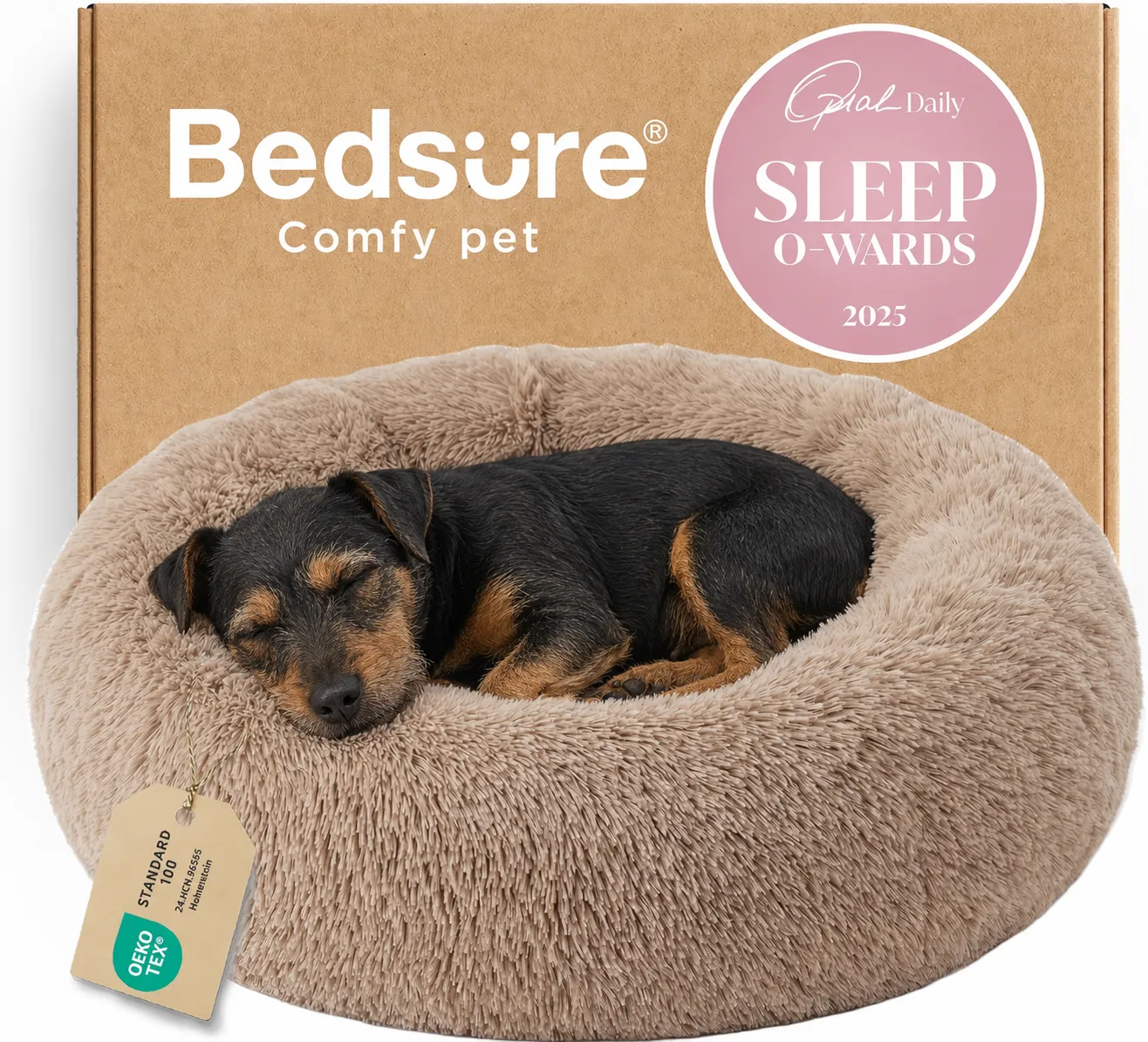 Bedsure Calming Donut Dog Bed